Choosing a Bathtub
A bath anchors the bathroom — visually and practically. Whether you want a freestanding centrepiece, a space-saving back-to-wall tub or a bath you can shower over, the right choice comes down to the room size, the plumbing and how you'll actually use it.
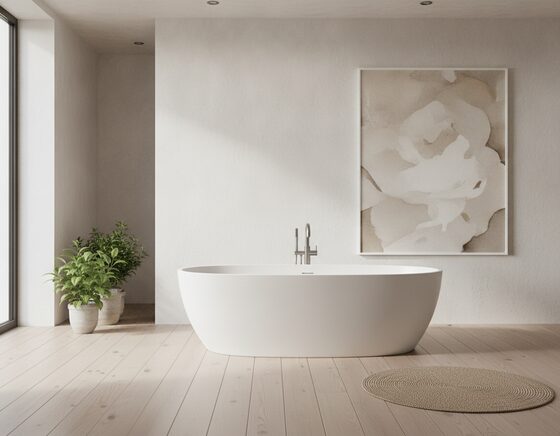
The main styles
Freestanding baths sit proud of the wall as a feature and suit a room with space to walk around them. Back-to-wall baths give a similar clean look while saving space, sitting flush against the wall. Inset (drop-in) baths are built into a tiled hob and are the most economical, and are the usual choice when you want to shower over the bath in a family bathroom. Corner baths can rescue an awkward layout.
Size, depth and material
Measure the space carefully and remember to allow for the tap and any hob. Look at internal length and depth rather than just the outside dimension — a deeper bath holds a better soak. Most baths are acrylic, which is warm to the touch, holds heat well and is light enough for an upstairs floor; stone-composite and solid-surface baths feel more substantial but weigh more, so the floor may need checking.
Tapware and waste
Decide early how the bath fills: a freestanding floor-mounted bath filler, a wall spout, or a hob-mounted set. Freestanding baths often need floor plumbing set out precisely before tiling, so plan the tap position with your plumber. Confirm the waste and overflow location matches your drainage.
Try one for size locally
A bath is hard to judge from a photo — it’s worth stepping into a few. If you’re near Wollongong, you can explore a range of freestanding and inset baths at Just Bathrooms, a local showroom, and compare depths and shapes in person.