Freestanding Bathtubs
A freestanding bath is the classic statement piece — a sculptural tub that stands away from the walls and draws the eye. It brings a sense of calm and space to a bathroom, and with a few practical checks it's a straightforward addition to a renovation.
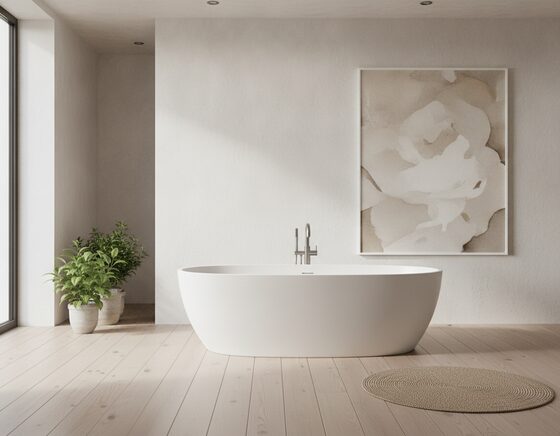
Shapes and finishes
Freestanding baths range from soft, oval slipper shapes to crisp rectangular designs with squared ends. Acrylic is the most common material — warm underfoot, good at holding heat and light enough for most floors — while solid-surface and stone-composite baths have a heavier, more matte, spa-like feel. Finishes run from classic gloss white to matte white and, increasingly, matte black or two-tone exteriors for a bolder look.
Planning the space
The appeal of a freestanding bath is the space around it, so allow a comfortable gap on each accessible side. Think about weight when full: a large stone bath plus water is heavy, so an upstairs installation may need the floor checked. Position it where it makes sense with the window and the rest of the room, not just against a convenient wall.
Filling and draining
Freestanding baths are usually filled by a floor-mounted bath filler or a wall-mounted spout, and the water and waste plumbing has to be set out before the floor is tiled — get the centre lines marked with your plumber early. Confirm the bath’s waste position (centre or end) matches your drain, and choose a pop-up or freestanding waste in a finish that suits your tapware.
See them in person
If you’re renovating in the Illawarra, you can explore a selection of freestanding baths at Just Bathrooms, a local South Coast showroom, and see how different shapes sit in a real setting before you decide.