Freestanding vs Wall-Hung Vanities
One of the first decisions when choosing a vanity is whether it should stand on the floor or hang off the wall. Taking a 900mm coloured vanity as the example, this guide weighs a freestanding cabinet against a wall-hung one across storage, cleaning and installation — so you can pick the mount that suits your bathroom rather than just the look.
Storage and stability
A freestanding vanity runs all the way to the floor, so the cabinet can be taller and deeper — often meaning more drawer volume and a lower kickboard that hides the plumbing. It also carries its own weight, so it doesn’t rely on solid in-wall fixing, which makes it a more forgiving choice in a straight swap or where the wall structure is uncertain. On a 900mm unit with a right-hand drawer bank, that extra depth turns into genuinely usable storage.
Cleaning and the sense of space
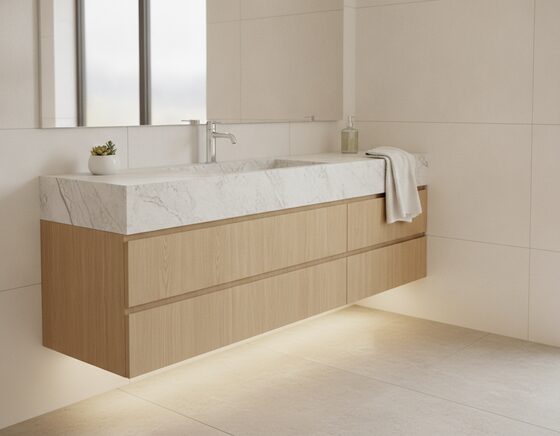
The main trade-off is underneath. A wall-hung unit leaves the floor clear, so the room feels larger and mopping is effortless — but it needs framed support and sits above the floor, limiting cabinet depth. A freestanding cabinet meets the floor, which grounds the room and hides pipework, at the cost of a base you clean around rather than under.
Choosing between them
Go freestanding where you want maximum storage, a simple install, or a more traditional, solid look. Choose wall-hung where floor space and easy cleaning matter most and the wall can be framed to take the load. Either way, look for soft-close drawers, a moisture-resistant finish and a benchtop that suits your tapware.
Compare both in person
If you’re fitting out a bathroom in the Illawarra, you can browse a range of bathroom vanities at Just Bathrooms, a local showroom, and see freestanding and wall-hung units side by side.