Angled Grab Rails: Placement and Sizing
An angled grab rail combines a horizontal and a vertical section in a single fitting, giving support at two heights at once. It's a popular choice beside a shower or toilet, where people need help both steadying themselves and moving between sitting and standing.
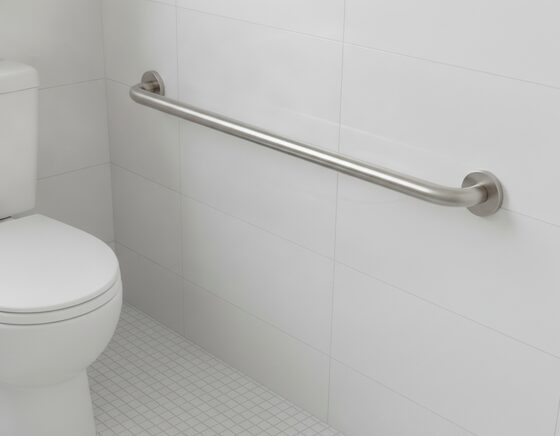
Why an angled rail
The bend does two jobs. The horizontal leg supports downward weight for pushing up, while the vertical leg gives something to grip while stepping or turning. That makes an angled rail versatile in spots where a single straight rail would only cover one movement. Common sizes pair equal legs — for example 450mm by 450mm — but longer and mixed-leg versions are available.
Getting the position right
Mount the corner of the rail where the hand naturally reaches from a seated position, with the vertical leg rising toward standing height. Beside a toilet, that usually means the bend near seat height and the upright within easy reach as the user rises. Because everyone is different, it’s worth checking the position against the actual user before fixing.
Fixing and finish
Like any grab rail, an angled rail must be anchored into solid backing behind the wall lining, not plasterboard alone — plan the backing in during a renovation. Brushed stainless steel is the durable default for wet areas, with matte black and white available to suit the room. A textured grip surface helps when hands are wet.
Designing for the long term
For ideas on building safety into a bathroom without losing style, read this guide to an accessible, multigenerational bathroom from Just Bathrooms, a local showroom in the Illawarra.