Wall-Hung Basins Explained
A wall-hung basin fixes straight to the wall with no cabinet beneath it, leaving the floor open underneath. That openness makes a small bathroom or powder room feel larger and lighter, and it makes cleaning the floor far easier.
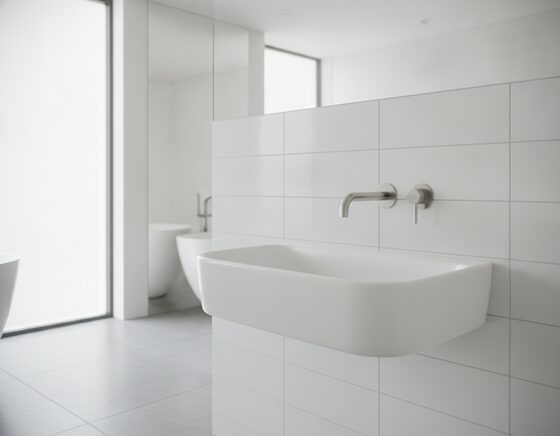
Why go wall-hung
The biggest wins are space and flexibility. With nothing on the floor, the room reads as bigger and you can set the basin at whatever height suits the household. Wall-hung basins also suit a pared-back, contemporary look where the wall — not a cabinet — is the backdrop.
Fixing and plumbing
Because the basin’s weight is carried by the wall, the fixing matters. A masonry wall can take heavy-duty anchors, but a stud wall usually needs noggins or a concealed mounting bracket installed before the wall is lined — plan this before tiling. Most wall-hung basins are designed for a bottle trap, and where you want to hide the pipework, an in-wall or concealed trap keeps the clean look intact.
Choosing a size and shape
Wall-hung basins range from tiny cloakroom bowls to full-width designs with a tap ledge and a shelf below. Measure the wall space and the door swing, and leave comfortable clearance either side. If you need somewhere to rest soap and a hand towel, look for a model with an integrated shelf or a wider rim.
See the options locally
Renovating near Wollongong? You can view a selection of vanities and basins at Just Bathrooms, a local showroom, to get a feel for sizes and proportions before you commit.