Wall-Hung Toilet Pans and In-Wall Cistern Basics
A wall-hung toilet pan fixes to a frame built inside the wall rather than standing on the floor, so the bowl appears to float and the cistern stays hidden behind the tiles. It's a clean, space-saving look — but it depends entirely on the in-wall cistern frame doing the structural work. Here's how the two parts fit together.
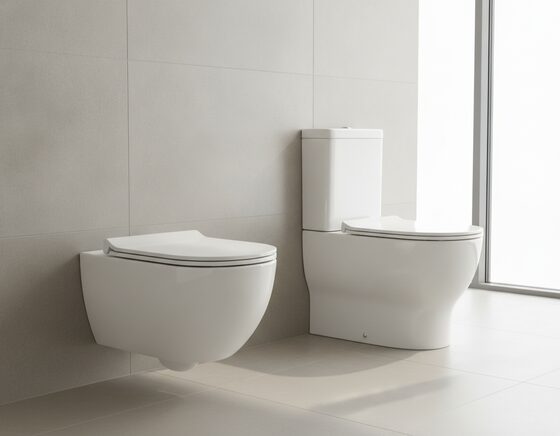
How the pan mounts to the frame
The visible pan is only half the system. Behind the wall sits a steel frame that carries the cistern and bolts to the floor and wall studs. The pan hangs off two threaded bolts projecting from this frame, and the frame — not the wall lining — bears the weight of the pan and its user. That’s why a wall-hung toilet can’t simply be screwed to a plasterboard wall; it needs the rated frame installed first, which is why these suites are best planned into a renovation.
What the floating design gives you
With nothing touching the floor, cleaning underneath is effortless and the room feels more open — a real advantage in smaller bathrooms. A rimless bowl adds to the easy-clean story, washing an open surface with no hollow rim. Another quiet benefit is adjustable height: because the pan mounts to the frame, its position can be set to suit the household during installation.
Planning the install
The cistern hides in the wall, controlled by a flush plate on the face of the tiles, so choose a plate that matches the frame. Allow for the wall depth the frame needs, confirm the pan and frame are a compatible pair, and keep access to the concealed valves via the removable plate.
Seeing the parts together
To see wall-hung pans and their frames and plates as a set, browse a range of toilet suites at Just Bathrooms, a local showroom near Wollongong.