Wall-Hung Timber-Look Vanities Explained
A wall-hung vanity in a dark-oak woodgrain finish brings warmth to a bathroom while leaving the floor visible beneath it. That strip of exposed floor is the trick that makes a room feel bigger. This guide explains how floating vanities are mounted and where the woodgrain finish shines.
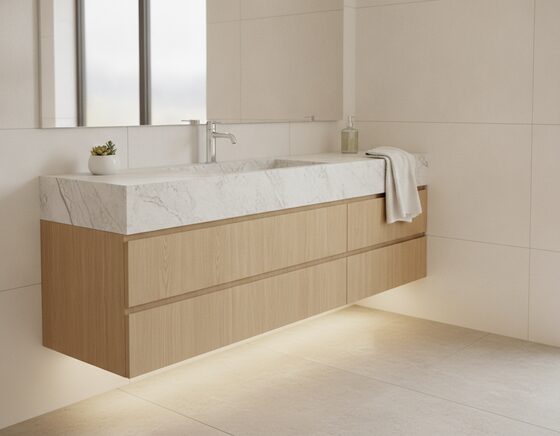
How a floating vanity frees up space
A wall-hung cabinet carries its weight on a concealed bracket or batten fixed into the wall framing, so nothing touches the floor. Visually, that continuous run of tiles under the unit makes the whole room read as larger and easier to clean — no skirting gap to trap dust, and a quick pass of a mop underneath. Because the load goes into the wall, it is worth confirming there is solid noggin or a mounting rail behind the tiles before installation.
Why a dark woodgrain finish works
A dark-oak woodgrain front adds depth and a natural grain pattern that a flat colour cannot. Against light tiles it becomes a warm focal point; against darker, moody schemes it settles in as part of a considered whole. The timber look also hides water spots and fingerprints better than a plain gloss, which keeps a well-used vanity looking tidy between cleans.
Setting the height and the plumbing
One quiet advantage of a floating cabinet is that you choose the mounting height — a touch taller than a standard floor unit can be kinder on the back. Plan the wall plumbing early, since the waste and supply lines need to meet the basin cleanly with nothing showing below. If you would like to see floating designs and timber tones in person, you can explore the range of bathroom vanities at Just Bathrooms, a local showroom near Wollongong.