Choosing a Replacement Toilet Seat
A worn, loose or cracked toilet seat is one of the cheapest and quickest upgrades in a bathroom — but only if the replacement actually fits the pan. A soft-close seat and cover in particular can transform how the toilet feels to use. The key is matching the new seat to the shape and fixings of your existing bowl.
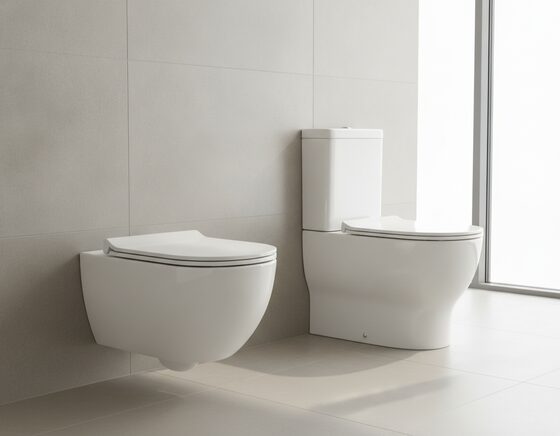
Why soft-close is worth it
A soft-close seat uses a damped hinge so the lid and seat lower gently instead of slamming. It’s quieter, kinder to the ceramic and safer around children’s fingers, and it’s become the expected standard on most modern seats. Many soft-close seats also offer quick-release hinges that let you lift the whole seat off for a proper clean around the fixings — a genuinely useful feature on a family toilet where the hinge area collects grime.
Matching the seat to your pan
The main thing to get right is the bowl shape and the seat’s mounting. Pans come in different lengths and profiles — more rounded or more elongated — and a seat has to suit that outline to sit correctly without overhanging or leaving a gap. Measure your pan and note the distance between the fixing holes at the back. If your current seat fits well, using it as a reference for shape and hole spacing is the safest way to choose a match.
Material and everyday durability
Seats are commonly moulded thermoplastic or, for a heavier feel, thermoset — the latter resists scratches and staining well and keeps its finish over years of use. Whichever you choose, look for sturdy, corrosion-resistant hinges, since the hinge is usually what fails first.
Finding a compatible seat
To match a seat to your pan or plan a full upgrade, browse a range of toilet suites at Just Bathrooms, a local showroom in the Illawarra region.