Understanding Wall-Faced Toilet Pans
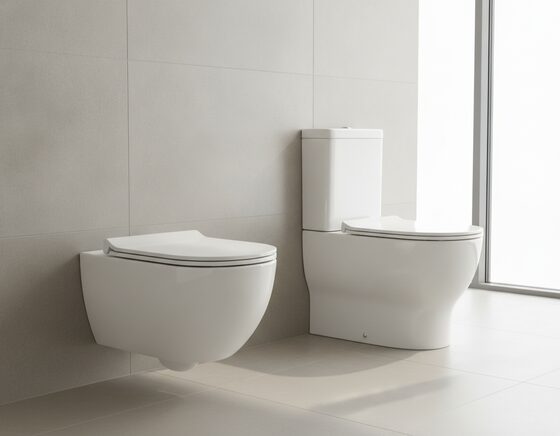
A wall-faced pan sits on the floor but pushes right back against the wall, hiding the trap and pipework behind the ceramic for a clean, uninterrupted line. It's a popular middle ground between a traditional close-coupled suite and a fully wall-hung design. This guide covers how a floor-mounted wall-faced pan works and what to check before buying one.
Why the trap is hidden
On an older pan the S- or P-trap is visible at the base, collecting dust and making the floor awkward to clean. A wall-faced pan encloses that trapway inside the ceramic body and sits flush to the wall, so there are no exposed pipes and no fiddly gap behind the bowl. The result is a tidier profile and a much faster wipe-down — a genuine advantage in a busy family bathroom.
Set-out is everything
Because the pan connects to the waste hidden behind it, the set-out — the distance from the finished wall to the centre of the outlet — has to match the pan. Many wall-faced pans offer a variable or universal connector that tolerates a range of set-outs, which makes them more forgiving on a renovation where the old plumbing sits at an unusual measurement. Confirm the pan suits your floor waste (S-trap) or wall waste (P-trap) before ordering.
Pairing and finish
A floor-mounted wall-faced pan can run as a standalone pan with a concealed or link cistern, or as part of a matched suite. Look for a rimless, easy-clean bowl and a soft-close seat, and keep the flush buttons in the same finish family as your tapware so the fixture reads as part of the room rather than an afterthought.
Compare styles in person
If you’re renovating near Wollongong, you can view the range of toilet suites at Just Bathrooms, a local showroom, and see how wall-faced pans compare with wall-hung and back-to-wall options.